In a daily routine of remote work and omnipresent screens, posture often deteriorates without us realizing it: rounded shoulders, head thrown forward, lumbar tension. Improving posture requires neither expensive subscriptions nor sophisticated equipment. Some targeted exercises, a bit of stretching, and an ergonomically adapted home environment are enough to restore good alignment, reduce back pain, and enhance well-being. This file offers a practical and progressive method to integrate a daily routine, strengthen the abdominal belt and back muscles, gain balance, and prevent low back pain. Illustrated by Claire’s journey — 38 years old, remote consulting — this guide explains what to do, how to adapt it to your level, and how to maintain the benefits over the long term.
- Objective: correct alignment, relieve the back, and stabilize the trunk.
- Method: strengthening (planking), daily stretches, balance exercises.
- Frequency: 10–30 minutes per session, 3 times a week for visible results.
- Equipment: stable chair, elastic band or small weights; optional but useful.
- To prioritize: gentle progress and attention to breathing.
Understanding posture: definition, stakes, and effects on health
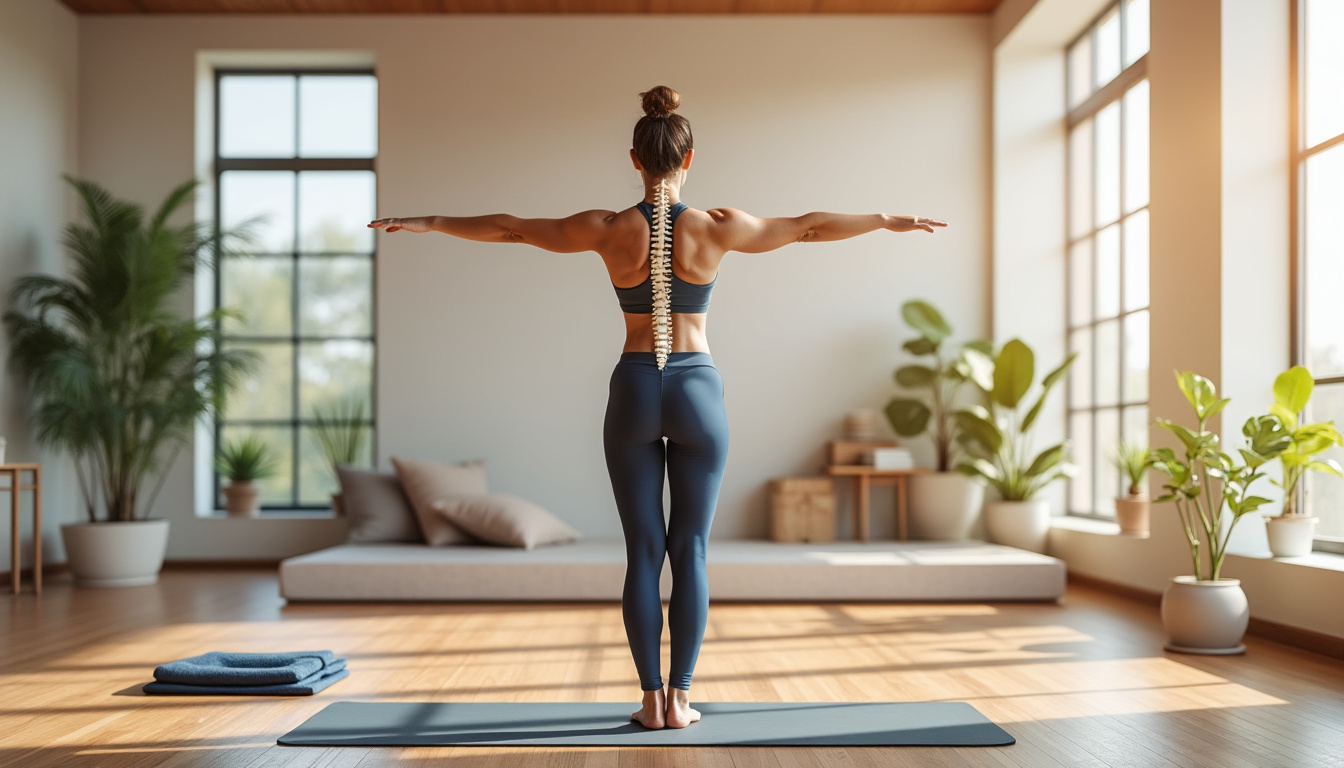
Posture refers to the alignment of the body at rest or in motion. Poor alignment creates localized tension and compensations that, over time, increase the risk of chronic pain, particularly in the back and neck. By 2025, the extension of working from home intensified these imbalances in many people.
The stakes are clear: limit postural fatigue, reduce lumbar and cervico-thoracic pain, and maintain mobility. Strengthening the deep muscles (abdominal belt, lumbar muscles, rhomboids) and targeted stretches form the basis of an effective strategy for postural improvement.
Who are these home posture exercises for?
These practices are suitable for anyone looking to improve their alignment: remote workers, sedentary individuals, athletes wanting to correct imbalances, and seniors aiming to maintain balance. Claire, a fictional consultant, illustrates the typical case: cervical discomfort in the evening, slouched back after several hours of screen time. With 15 minutes of targeted exercises daily, her mobility and muscle tone have significantly improved within weeks.
There are also adapted variations for people with reduced mobility or seniors: seated movements, table support, and moderate repetitions that ensure safety and benefit.
Muscle strengthening: essential exercises to straighten the back and alignment
Strengthening the abdominal belt and back muscles is the cornerstone of postural improvement. Frontal and lateral planking activates the deep muscles essential for stabilizing the spine.
Here is a simple program to do at home, designed to progress gently and optimize trunk alignment.
| Exercise | Target area | Duration / repetitions | Frequency |
|---|---|---|---|
| Frontal planking | Deep abdominals, lumbar | 20–40 s | 3 to 5 sets, 3x/week |
| Lateral planking | Obliques, lumbar | 20–40 s per side | 3 to 5 sets, 3x/week |
| Back extensions | Dorsals, lumbar | 10–15 repetitions | 3x/week |
| Pinch shoulder blades | Rhomboids, trapezius | 10 repetitions, hold for 3 s | Daily |
For guided variants and technical details, refer to complete sheets such as those offered by health professionals and practical tutorials on specialized sites.
Essential stretches to release tension and maintain postural balance
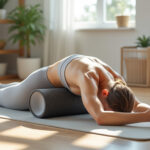
Stretches complement strengthening: they restore mobility and prevent stiffness. Daily practice promotes better posture and reduces pressure on the vertebrae.
Recommended exercises: cat-cow stretch, opening pectorals against a wall, cervical and hamstring stretches. Hold each position for 30 seconds, breathe slowly, and release tensions.
- Cat-cow: gentle spinal mobilization to awaken mobility.
- Pectorals against the wall: opens the chest cage, corrects the slouched back.
- Cervical stretch: reduces pain related to the head projected forward.
- Hamstrings: balance the pelvis and prevent anteversion.
Coordination and balance: practical exercises to stabilize alignment
Good postural maintenance also depends on neuromuscular coordination. Proprioception exercises enhance the ability to stay aligned in motion and at rest.
Simple and effective examples to integrate: cross-coordination on all fours, dynamic planking with arm extension, one-legged support with open then closed eyes. These movements simultaneously train stability, concentration, and respiratory control.
Home ergonomics: adapting the space to support your postural progress
The work environment amplifies or nullifies the benefits of the exercises. An adapted ergonomics maintains daily alignment and limits symptoms.
Practical tips: adjust the seat height, position the top of the screen at eye level, keep forearms parallel to the ground, and clear space for regular movement.
- Feet flat and knee angle close to 90°.
- Top of the screen slightly below eye level.
- Forearms horizontal to limit shoulder elevation.
- Alternate sitting/standing and practice active breaks every 45–60 minutes.
Common mistakes and best practices to preserve your back
Several traps can compromise your progress. Avoiding them optimizes the impact of the sessions and protects the spine.
- Excessive arch during planking: contract your abdominals and maintain a neutral back.
- Poor breathing: breathe slowly to better activate the deep muscles.
- Failure to engage the abdominal: visualize the spine as long and stable.
- Too rapid progression: increase time or repetitions gradually.
- Inconsistency: schedule sessions like a weekly appointment.
Typical program and adaptation for seniors or reduced mobility
A complete session can last 20–30 minutes: warm-up, strengthening, stretching, balance work, and cool down. For seniors, prioritize seated or supported versions and reduce repetitions.
Some adapted exercises: seated arm raises, back extensions supported by a table, pelvic movements. These practices improve lumbar mobility and balance without overloading the joints.
Complementary resources and practical references
To deepen the stretching technique post-exercise, refer to practical guides like stretching protocols. To specifically strengthen the lower back, targeted exercises are available here: lumbar strengthening program.
These resources complement the routine and offer variants according to your level.
Practical list: express 10-minute routine for the day
A short and regular routine may be enough to counter sedentary behavior.
- 1 min walking in place for warm-up
- 2 min frontal planking (2 x 60 s or 4 x 30 s)
- 1 min lateral planking (30 s per side)
- 2 min back extensions (10–15 repetitions)
- 3 x 30 s stretching pectorals, cervical, cat-cow
What exercises provide the best results for the back?
Frontal and lateral planking, back extensions, and exercises targeting the rhomboids are particularly effective. Combine strengthening and stretching for lasting benefits.
How frequently should one practice to see improvement?
Regular practice, ideally 3 times a week for 10–30 minutes, shows improvements in a few weeks. Consistency is more important than intensity.
Are these exercises suitable for elderly individuals?
Yes: there are seated or supported variations. Reduce repetitions and prioritize safety. Consult a professional if severe pain appears.
How can these exercises be integrated into a day of sitting work?
Schedule active breaks every 45–60 minutes: 1–2 minutes of stretching or mobility, and a longer session (10–15 min) at the end of the morning or in the evening.