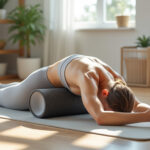
After exertion, many pack their things and leave without a word for their bodies. However, a few minutes of well-chosen stretching transforms recovery: they relieve muscle tension, promote blood circulation, limit muscle pain, and directly contribute to injury prevention. This text explains why post-sport stretching is essential, how to practice it safely, and offers simple routines to integrate right at the end of your session. You will find concrete advice to improve your flexibility, optimize your recovery, and preserve your performance in the long term.
- Goal: understand the impact of post-exercise stretching on recovery and injury prevention.
- Practice: which positions to prioritize, duration and rhythm to adopt.
- Priority: which areas to stretch according to your session (upper/lower body).
- Tip: how to incorporate 10–15 minutes of stretching into a demanding routine.
- Resources: links to practical guides and routines for further exploration.
Why stretching after sports improves recovery
After exertion, the muscles remain contracted and the heart rate is elevated. Post-exercise stretching helps gradually bring the body back to a resting state by facilitating blood circulation and the elimination of metabolic byproducts. This process reduces the sensation of stiffness and muscle pain in the hours following the session.
Moreover, stretching affects muscle length and joint mobility, which decreases the risk of strains and sprains during subsequent workouts. It also contributes to better postural balance by relaxing overworked areas like the shoulders and lower back.
Insight: considering stretching as an active recovery phase significantly improves preparation for the next session.
Definition and differences between static and dynamic stretching
Stretching can be classified into two main categories. Dynamic stretching involves controlled movements that gradually increase joint range; they are mainly used for warming up. Static stretching requires holding a position for a given duration (usually 20–30 seconds) and is favored after effort to relieve tensions.
Both approaches complement each other: a dynamic warm-up before effort, followed by static stretching at the end of the session to promote recovery and flexibility.
Insight: choosing the type of stretch according to the moment (before or after) maximizes effectiveness while minimizing risks.
Target audience: who must stretch after sports?
Anyone who engages in regular physical activity benefits from incorporating stretching: runners, cyclists, weightlifters, swimmers, and even amateur athletes who train a few times a week.
Take Claire, 34, a casual runner: after a 10 km, she often feels tension in her calves and hamstrings. By adopting a targeted post-run routine of 10 minutes, Claire has seen her soreness decrease and her stride become more comfortable. This practical application illustrates the value of stretching for a wide audience.
Insight: regardless of your goals, a few targeted stretches after exertion improve comfort and the sustainability of sports practice.
Benefits, limits, and points of attention for post-exercise stretching
The main benefits of stretching after sports are numerous:
- Improvement of blood circulation: facilitates the removal of metabolic waste.
- Reduction of muscle tension: decreases the feeling of stiffness.
- Injury prevention: promotes muscle length and joint stability.
- Relaxation: activation of the parasympathetic system to calm the body.
- Gain of flexibility: improves range in the long term if practiced regularly.
Limits and precautions:
- Avoid forcing a painful muscle: sharp pain signals an abnormality.
- Don’t stretch cold: wait until the muscle is warm or do a few minutes of walking if necessary.
- Respect duration and progression: 20–30 seconds for an effective static stretch without risk.
Insight: stretching brings a lot, but its effectiveness depends on the quality, progression, and frequency of practice.
Practical modalities: how to perform effective stretches after sports
Following a simple method helps avoid common mistakes. After the cool-down phase (2–5 minutes of walking or breathing exercises), spend 10 to 15 minutes on static stretching, targeting the areas worked during the session.
Recommended duration: hold each position for 20 to 30 seconds, repeat 2 times if necessary. Breathe deeply and gradually release the action.
Example of a post-workout sequence (10 minutes):
- Calves: 30 s per leg.
- Quadriceps: 30 s per leg.
- Hamstrings: 30 s per leg.
- Lower back (child’s pose): 30–45 s.
- Shoulders/chest: 20–30 s per side.
Insight: a short structured and regular routine is more beneficial than a long occasional and poorly targeted stretch.
Concrete examples and routines according to the type of training
To adapt stretching, it is important to identify the muscle groups most engaged:
- Running: calves, hamstrings, quadriceps, hips.
- Leg weight training: quadriceps, hamstrings, adductors, calves.
- Upper body weight training/swimming: pectorals, deltoids, trapezius, latissimus dorsi.
Useful resources: a practical guide to learn the movements and their correct execution is available on the Decathlon guide on stretching. For specific exercises after exertion, also see the effective stretching exercises presented with variations according to the level.
Insight: a routine tailored to the sport practiced maximizes recovery and reduces muscle pain.
List of practical tips for integrating stretching into your routine
- Systematically schedule 10–15 minutes of stretching after each session.
- Focus on the areas most worked during the session.
- Breathe slowly: a long exhalation promotes muscle relaxation.
- Avoid jerking: movements should be slow and controlled.
- Stay consistent: a few minutes each day are better than a long irregular session.
Insight: turning stretching into a daily ritual facilitates the longevity and quality of your sports practice.
Comparison table: static vs dynamic stretching
| Type of stretch | When to use it | Recommended duration | Main effect |
|---|---|---|---|
| Dynamic stretching | Before exertion | 10–15 movements per joint | Prepares the muscles for movement, increases mobility |
| Static stretching | After exertion | 20–30 seconds per position | Relieves tension, promotes recovery |
| Active stretching (mobility) | During session or day | 5–10 minutes | Improves functional flexibility |
Insight: combining both approaches at the right time is key to better performance and injury prevention.
Common mistakes and good practices to follow
A few traps to avoid:
- Forcing a painful movement: sharp pain is not a sign of a good stretch.
- Stretching too long or excessively after an injury without medical advice.
- Neglecting breathing: holding your breath prevents muscle relaxation.
Good practices:
- Respect progressivity and document your sensations.
- Vary stretches according to age, flexibility, and type of effort.
- Seek reliable educational resources; for example, beginner routines and targeted exercises help to start safely, such as beginner yoga routines or exercises to strengthen the lower back.
Insight: listening to your body, progressing step by step, and relying on structured protocols limit risks and optimize benefits.
Simple actions to implement starting today
Start by integrating three priority stretches after your next session: calves, hamstrings, and shoulders. Schedule 10 minutes in your calendar and follow a small guided routine to anchor the habit. To delve deeper, consulting a visual guide facilitates the technique; for example, the Decathlon guide offers accessible step-by-step instructions.
Insight: minimal and regular commitment yields visible results on muscle pain and recovery quality.
{« @context »: »https://schema.org », »@type »: »FAQPage », »mainEntity »:[{« @type »: »Question », »name »: »How long should one stretch after a session? », »acceptedAnswer »:{« @type »: »Answer », »text »: »About 10 to 15 minutes is sufficient for a complete session targeting the worked areas. Hold each static stretch for 20–30 seconds. »}},{« @type »: »Question », »name »: »Can we stretch every day? », »acceptedAnswer »:{« @type »: »Answer », »text »: »Yes, but adjust the intensity: favor light stretches on rest days and targeted stretches after exertion. Consistency is more important than isolated duration. »}},{« @type »: »Question », »name »: »Do stretches really prevent injuries? », »acceptedAnswer »:{« @type »: »Answer », »text »: »They reduce the risk by improving flexibility and muscle balance, but are not sufficient by themselves: appropriate strengthening and progressive training are necessary for complete prevention. »}},{« @type »: »Question », »name »: »Should one stretch in case of persistent pain? », »acceptedAnswer »:{« @type »: »Answer », »text »: »In case of acute or persistent pain, avoid aggravating the area and consult a healthcare professional. Gentle stretches may help, but a diagnosis is still recommended. »}}]}How long should one stretch after a session?
About 10 to 15 minutes is sufficient for a complete session targeting the worked areas. Hold each static stretch for 20–30 seconds.
Can we stretch every day?
Yes, but adjust the intensity: favor light stretches on rest days and targeted stretches after exertion. Consistency is more important than isolated duration.
Do stretches really prevent injuries?
They reduce the risk by improving flexibility and muscle balance, but are not sufficient by themselves: appropriate strengthening and progressive training are necessary for complete prevention.
Should one stretch in case of persistent pain?
In case of acute or persistent pain, avoid aggravating the area and consult a healthcare professional. Gentle stretches may help, but a diagnosis is still recommended.